Welcome!
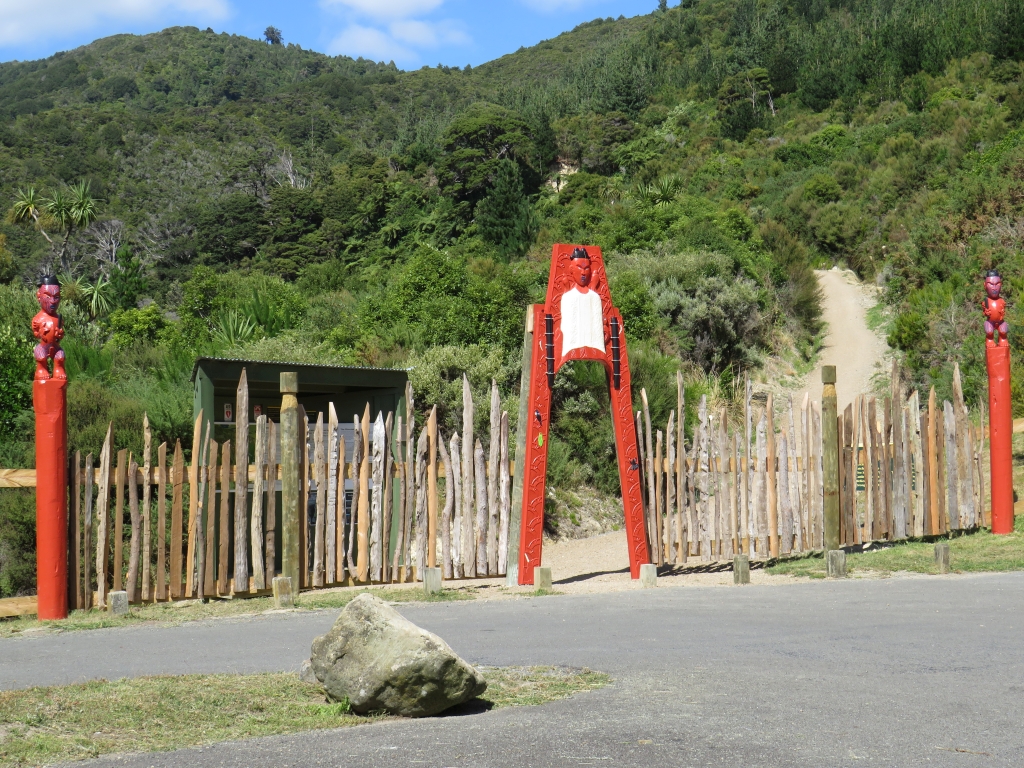
The Remutaka Conservation Trust is a community group committed to protecting and restoring the landscape and native wildlife of the Remutaka Forest Park located near New Zealand's capital city, Wellington.
The park - and mountain range - were recently renamed to 'Remutaka Forest Park' and 'Remutaka Range' following a Treaty settlement with Wairarapa and Southern Hawkes Bay iwi (Rangitāne o Wairarapa & Rangitāne o Tamaki nui-ā-Rua). (Details here...)
Remutaka Forest Park is a magnificent area of mostly native forest in the hills east of Wellington.
It encompasses the Remutaka Ranges and the Orongorongo River, just north of the spectacular earthquake terraces and seal colony at the Turakirae Head Scientific Reserve.
The Park is characterised by steep, bush-clad hills and narrow fern-filled valleys cut by abundant freshwater streams and the beautiful Orongorongo River. Throughout the park, there are many well-formed and signposted walking tracks appealing to bushwalkers and nature lovers of every age and state of fitness.
This 22,500 hectare park is easily accessed by road from Wellington or Lower Hutt. Simply take the hill road to Wainuiomata and follow the signs to the Coast Road/ Remutaka Forest Park and then turn left at the Catchpool Stream access road into the Park. (See Map)
The Remutaka Conservation Trust is committed to preserve and restore the natural biodiversity and historic resources of the Remutaka Forest Park valleys and environs... (More)
It has been active in bringing about many improvements to the Park and to the Catchpool Stream picnic areas and camping grounds. (Download our flyer here...)
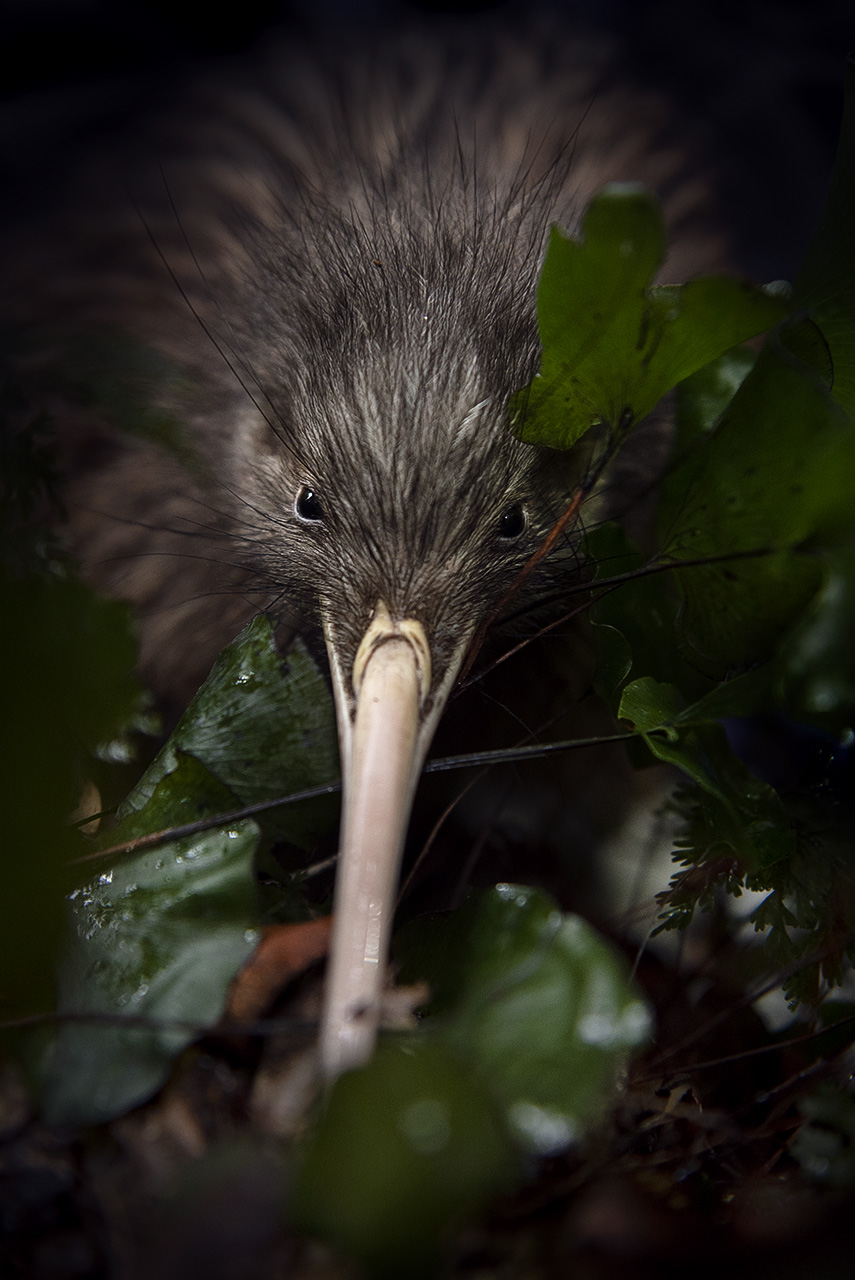
Our "Restore the Dawn Chorus" project is now in its 24th year and our flagship "Kiwi Project" has produced a large number of beautiful baby kiwi chicks!
*** This year we celebrate our 36th year of operations since the Trust was formed in 1988 ***
View our latest PressR/ Newsletter here:
Remu_Talker_Spring_2024 (PDF format, ~9.0Mb
Remu-Talker_Autumn_2024 (PDF format, 9.75Mb)
Replacing Traps for a Kiwi-Friendly Future (PDF format, 128kb)
Remu-Talker_Spring_2023 (PDF format, 5.4Mb)
Acoustic Recording Report - Kiwi Monitoring (PDF, 7.2Mb)
20 Years of Predator Trapping - Results and Analysis
(.pdf format ~2.9Mb)
15 years since our original kiwi release into the Remutakas
RNZ Radio Interview: 15 Years of Kiwi in the Remutakas
New Bat Survey Project
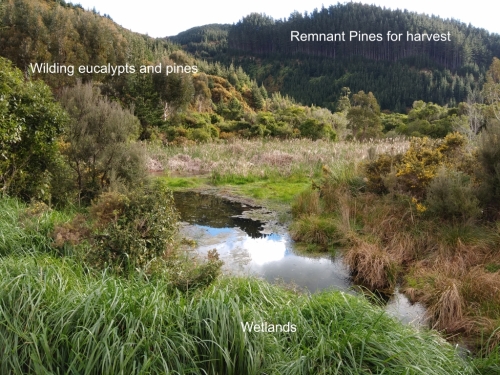
Wilding Pines Control - Catchpool Valley
President's Annual Report - 2021 (PDF ~979 kb)
Link to Latest Catchpool Restoration Update
Kiwi Avoidance Training for Dogs - Remutaka Forest Park - November 2024
Notice from the KAT team
From:kat@remutaka.nz
Subject:
Kiwi avoidance training
- Saturday 9th and
Sunday 10th November,
2024
Hi Dog Owners,
We have booked DOC-certified Kiwi Avoidance trainer Willie Marsh - and the Remutaka Conference Centre - for Saturday 9th - and Sunday 10th - November, 2024.
This email is to alert you to the dates.
A reminder that dogs need to be on leads in the Remutaka Forest Park even if they have been kiwi avoidance trained. This is a DOC requirement.
The avoidance training is an extra layer of protection for our kiwi. Dogs need to be retested every 12, 24 or 36 months depending on whether it is first time training or a retest.
The certificates show the expiry/retest date.
We will not take bookings until 2 weeks before that weekend when an email will be sent out with an invitation to book and information on the training. This makes it easier for us to manage the bookings .
To be added to our email list please email kat@remutaka.nz
Willy takes the dogs over a course in the bush with kiwi smell, props and calls to test if the dog is interested in the kiwi. He usually takes the dog off-lead with the owner and only uses the training collar on vibrate if the dog shows interest. For more information on Willy and his training methods, you could do a Google search on ‘Willy Marsh” and look at the Conservation blog, 'Kiwi lessons for dogs going bush'.
Kind regards,
Rosemary Thompson and the KAT Team
Remutaka Conservation Trust
 |
What does a male Brown Kiwi
sound like? Here's one calling on the first night of his release into the Remutaka Forest Park in May
2006. (848kb wav Recording, courtesy S. Ellis) Click the kiwi to play... |
 |
Female kiwi calls have a very different sound to
male kiwi calls. Here's a recently recorded female North Island brown kiwi calling, quite close to the microphone. (78kb MP3 format sound file). Credit: S. Ellis, 2019 - Remutaka Conservation Trust. |
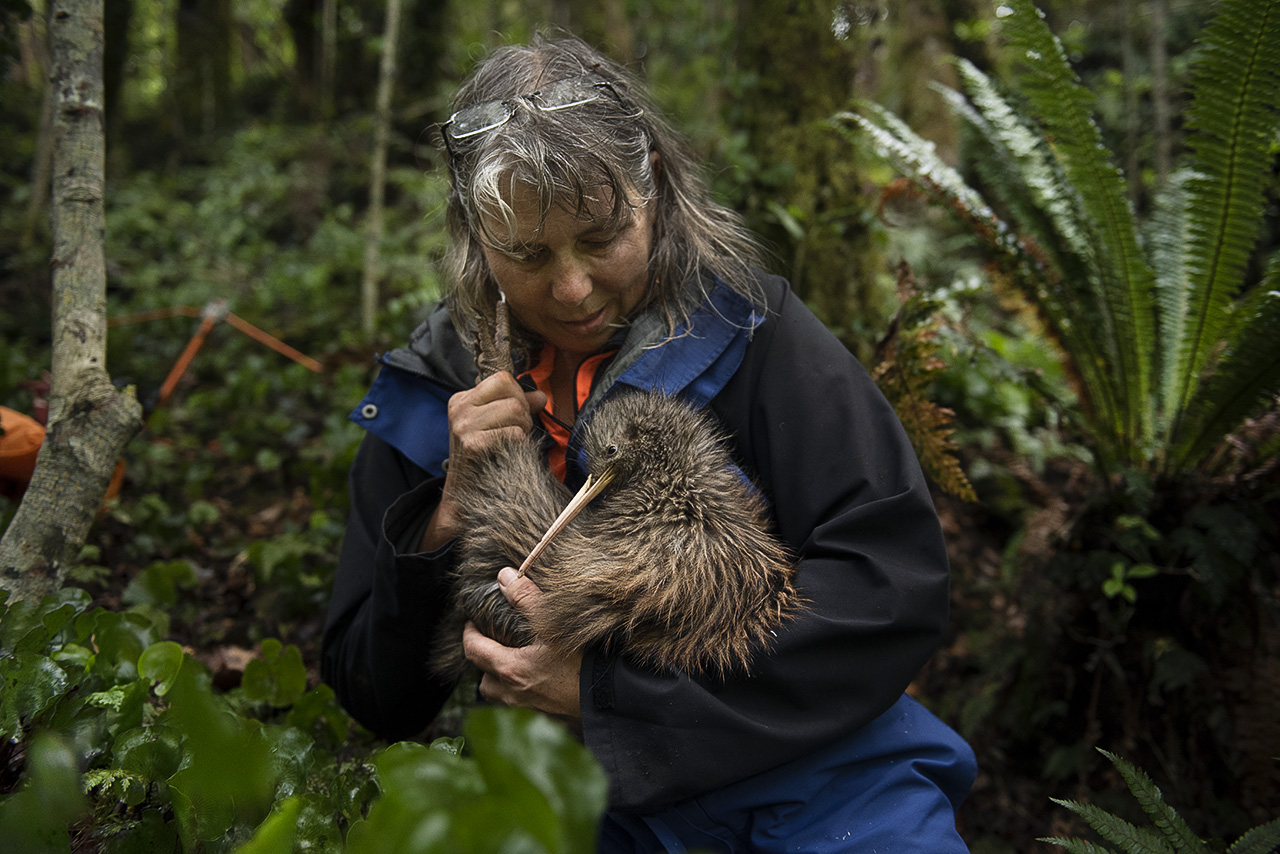
Remutaka Conservation Trust volunteer kiwi
handler, Susan Ellis, holds kiwi Marcel after his health-check and
transmitter removal. (Click for a larger image). Photo Credit: Neil R.
Hutton.
RNZ Radio Interview: 15 Years of Kiwi in the Remutakas
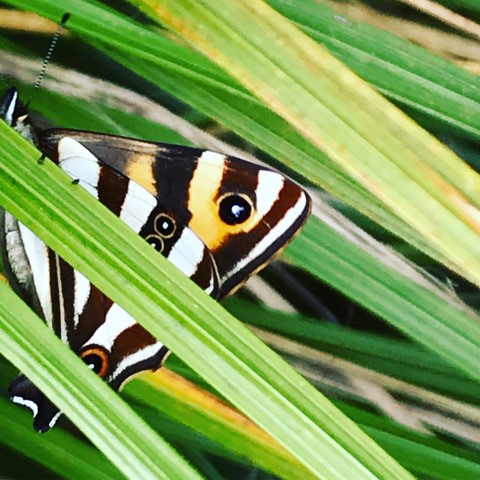
Fabulous rare sighting of a Forest Ringlet butterfly (Dodonidia
helmsii) in the Remutaka Forest Park - seen here on Astelia and Gahnia.
Photo credit: Gillian Candler.
These brightly-coloured endemic butterflies were once common here, and in the neighbouring East Harbour Regional Park to
our west, but they are now quite rare and apparently in decline for as yet
unexplained reasons. (Introduced wasps and other predators like
rats, possums and hedgehogs? Habitat
loss? Pathogens or parasites? Collectors? No-one is absolutely certain...)
The
photo above was taken
by award-winning children's author and keen tramper,
Gillian Candler,
whilst on a hike through our kiwi zone in the Remutaka Forest Park.
Please keep an eye out for these beautiful 'solar sailors' when you're out and about in the Park. Use the iNaturalistNZ app if you have your smartphone and/or camera handy for rapid, expert confirmation of your observations. More information about these remarkable butterflies and their life-stages here:
Wanted Poster (PDF ~4Mb)
Reports - S.R. Wheatley (PDF ~1.2Mb)

Leaf-veined slug observed at night in the
Remutaka Forest Park. Click for a close-up image. Photo credit: Nancy
Covington (Finger for scale courtesy of Susan Ellis).
These nocturnal slugs (Pseudaneitea sp.) are found in native bush and forests and graze on fungi and algae on leaf surfaces. One of our kiwi handlers, Susan Ellis, was up on McKerrow Track at around midnight the other night deploying acoustic recorders and listening for kiwi calls, when she and visiting Canadian, Nancy Covington, observed this fascinating creature. There are more than 23 native species of this family.
Our forests and streams come alive at night, with many nocturnal species. Native freshwater fish, Land planaria, weta and millipedes are also frequently observed.
Kiwi Spy
What's hidden down there in that deep, dark burrow? Here's a really good way to reveal all!
Read all about Alan Thompson's Kiwi Spy device here:

New Interpretive Signs
Unveiling of Bird Interpretation Panels, Rimutaka Forest Park
To conclude last year’s shared celebration of National Parks, the Department of Conservation, the US Embassy, and Rimutaka Forest Park Charitable Trust unveiled a series of native bird information panels for the Catchpool Valley of the Remutaka Forest Park, near Wellington.
The ceremony on Tuesday December 20 commenced with a blessing from representatives of the Wainuiomata Community Marae.
The dedication and short welcoming remarks from the President of the Trust, Geoff Cameron, was followed by brief addresses by the US Embassy NZ's representative, Rob Tate and also from Department of Conservation representative, Jack Mace.
The construction of the panels was made possible by a grant from the U.S. Embassy which then worked with the Trust on the design of the information panels about native bird species.
“We are very grateful for the grant from the U.S. Embassy towards this natural history-environmental management project. It helps to celebrate 100 years of the U.S. National Parks Service in 2016 and helps New Zealanders learn about the native birds they are encountering in the Catchpool Valley,” says Geoff Cameron, President of the Rimutaka Forest Park Trust.
Embassy Public Affairs Officer Rob Tate says that the shared year-long project to celebrate the importance of national parks and mark 100 years of the US National Park Service has been something the Embassy has been deeply committed to.
“Working with DOC, various iwi, and environmental trusts we have taken part in a huge range of activities. We have done the traditional planting of trees, and also done things like assisting in monitoring native bird habitats and walking the Tongariro Alpine Crossing with Ambassador Gilbert. We brought out a US Park Service Ranger from Hawaii to share best practices with her New Zealand counterparts, and the Senior Advisor on Native American Affairs at the White House to discuss the role of indigenous peoples in stewardship of natural spaces. We hope that all of these projects will continue to bear fruit well into the future,” he says.
“The team from the Rimutaka Forest Park Trust have been a delight to work with and it has been so rewarding to be involved in another project that will educate future generations about the importance of taking care of our natural heritage,” he adds.
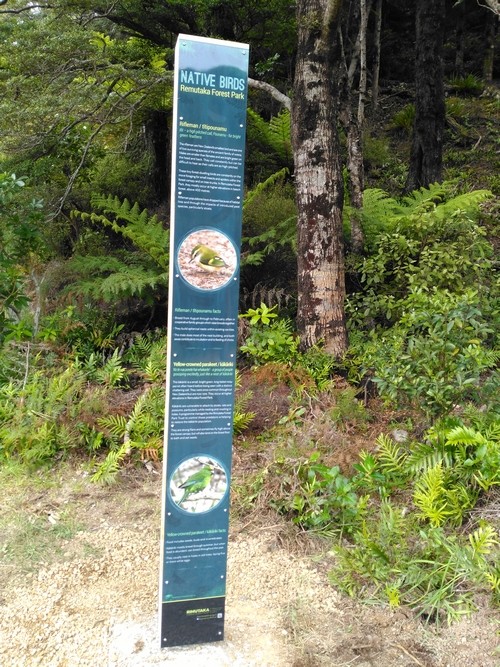
Photo of one of the 7 new bird interpretation panels installed at the Catchpool Valley road end. These informative 2m tall signs assist visitors to recognise some of the many beautiful native birds present in the Remutaka Forest Park. (Click for more information). Photo credit: PC.
Bird Call Prototype Trial:
Our resident electronics Wiz has done it again! This time around, Alan Thompson has created some hand-powered bird call stations to accompany our recently installed interpretive signs.
Check the video out here:

https://www.youtube.com/watch?v=aeOFmdfC-tQ
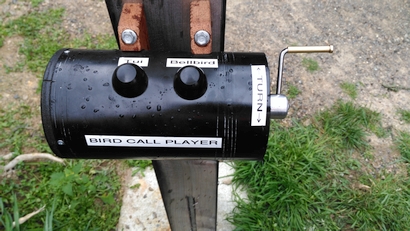
Prototype #1 of the hand-cranked bird call station affixed to one of our new native bird information panels. Several improved versions are now deployed on appropriate panels displaying the birds that the calls on the player represent.

Veteran volunteer trappers enjoying our end
of year BBQ on the lawns in front of the Catchpool Centre. Many of our
volunteers have contributed more than a decade of their lives to our
projects. (Click for a larger image). Photo credit: PC.
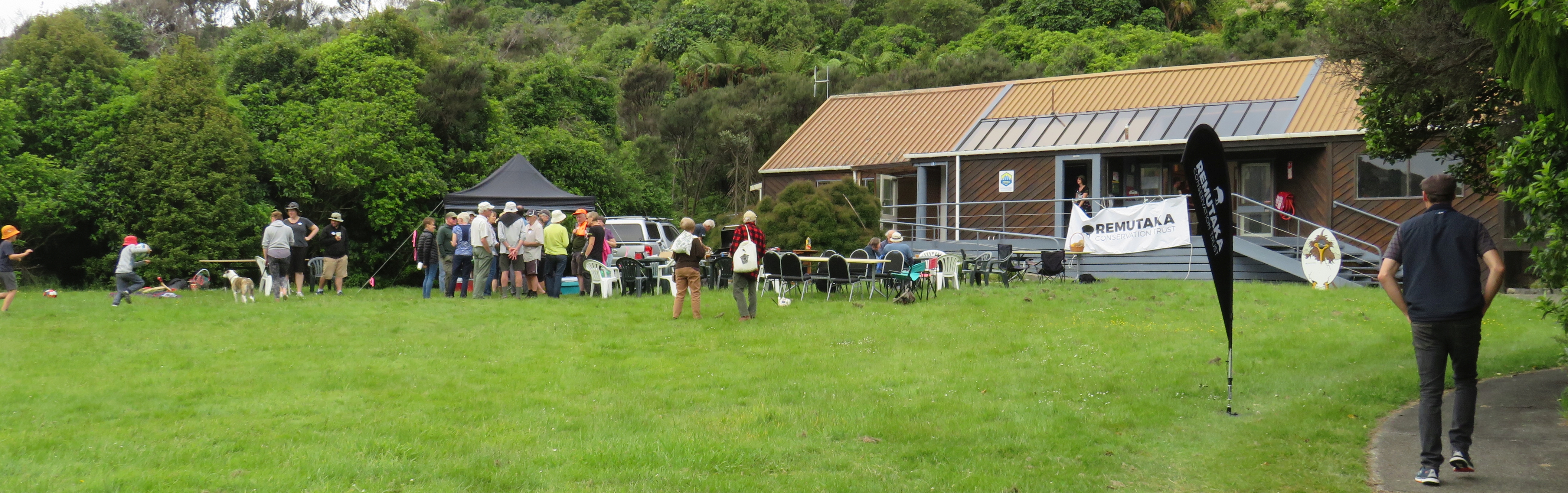
Members of the Trust arriving at the
Catchpool Centre venue for our End of Year BBQ celebrations last night.
(Click for a larger image). Photo credit: PC.
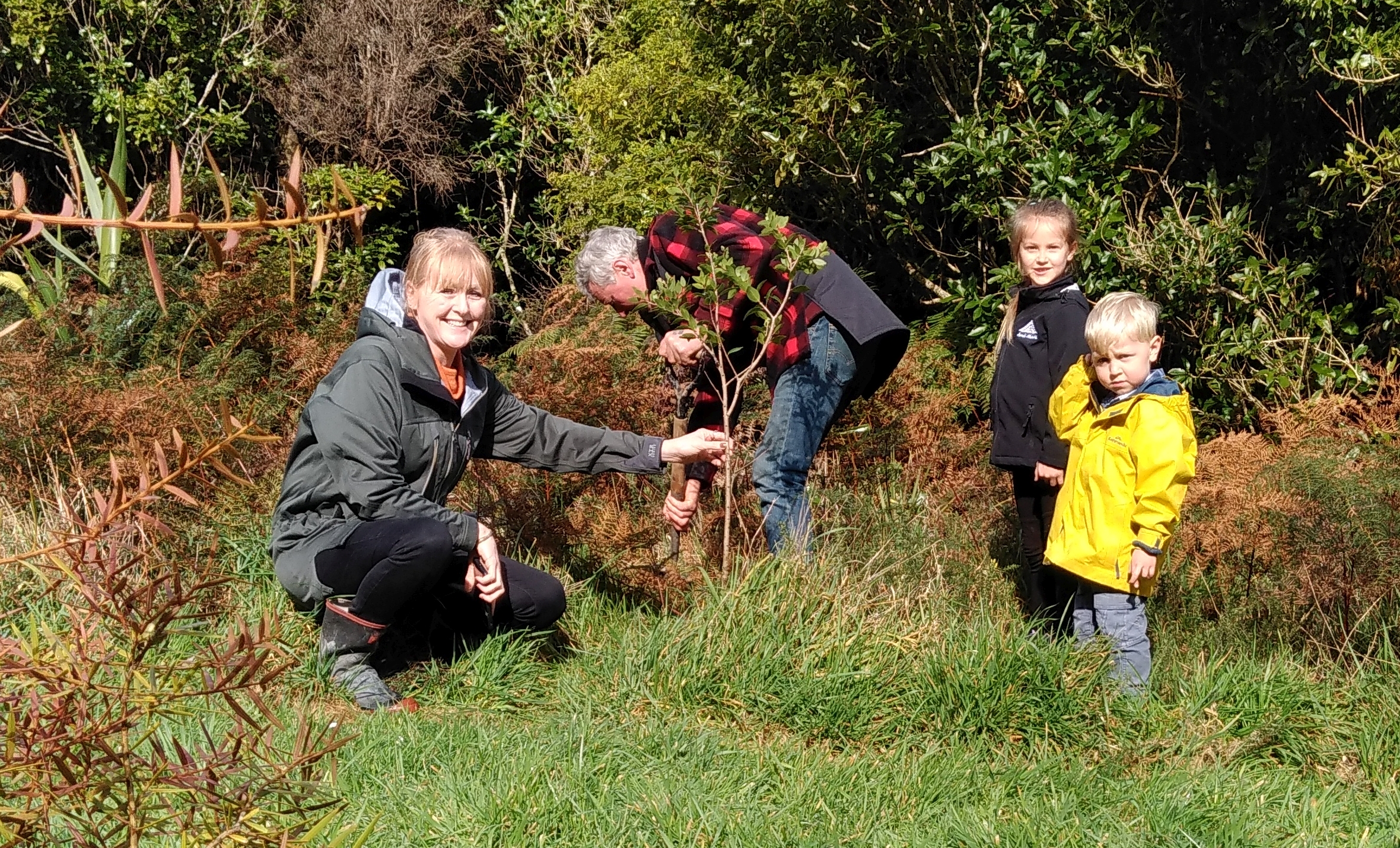
Kicking off Conservation Week in the Remutaka Forest Park are Miria and John, from Camp Wainui just up the Coast Road from the Catchpool. Miria and John have sponsored a kiwi as well as some native trees again this year, and are shown above planting Miria's Northern rata. John chose a mighty Totara, which he planted nearby with the help of two enthusiastic Grandchildren. The kids enjoyed playing in and exploring the Park, including investigating the weta pair that we found in one of our weta motels. (Click for a larger image). Photo credit: PC.
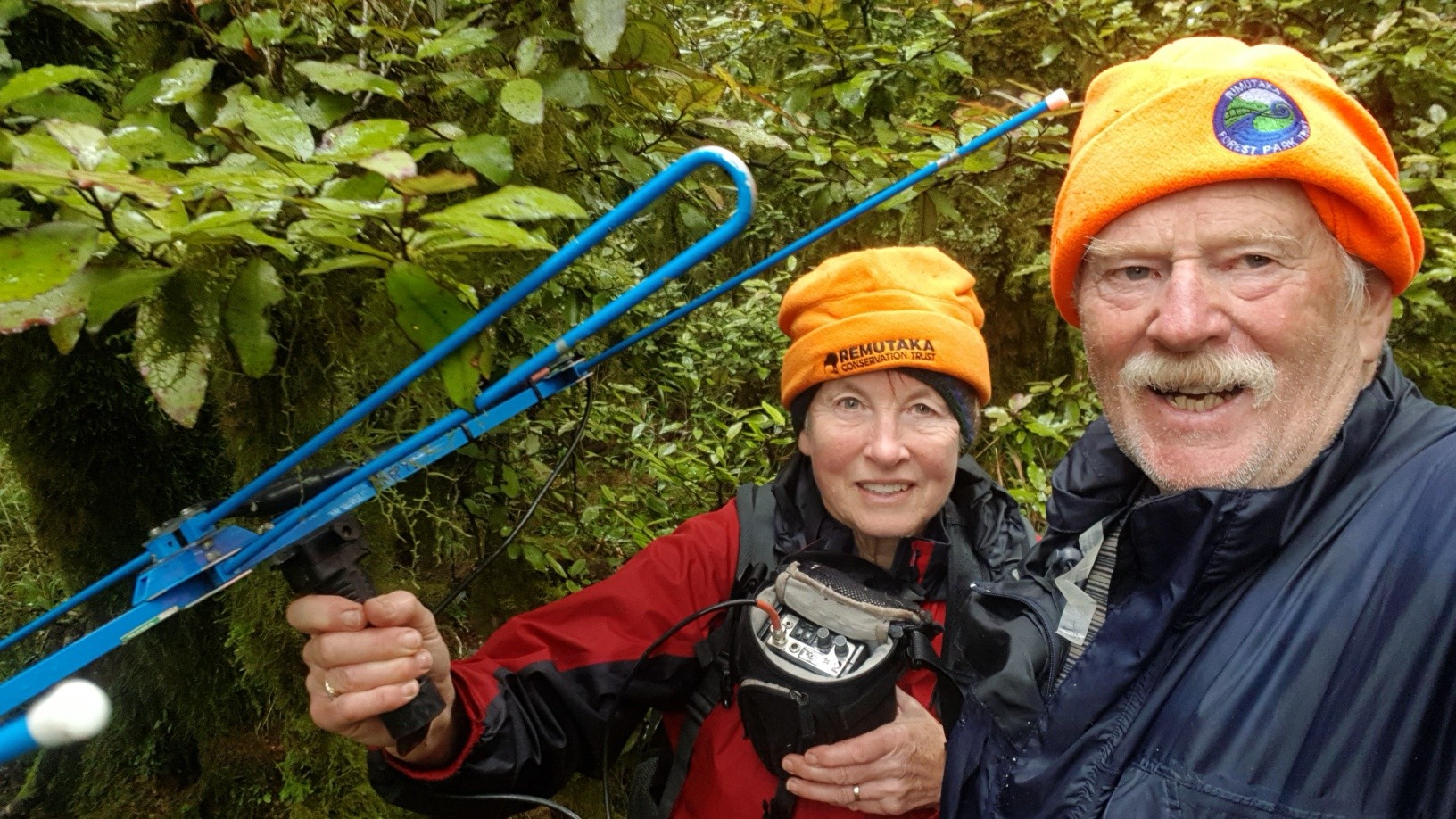
Jubilant Remutaka Conservation Trust kiwi trackers, Rosemary and Alan Thompson, finally acquire a signal for a missing kiwi - prosaically-named "Bird" - high up along Puketaha Ridge in the Wainuiomata Water Catchment. A sensational result, culminating from the effort of many trackers over the past 4 weeks, and highlighting the distance that juvenile kiwi can travel in just a short period of time. (Click for a larger view). Photo credit: Alan Thompson.